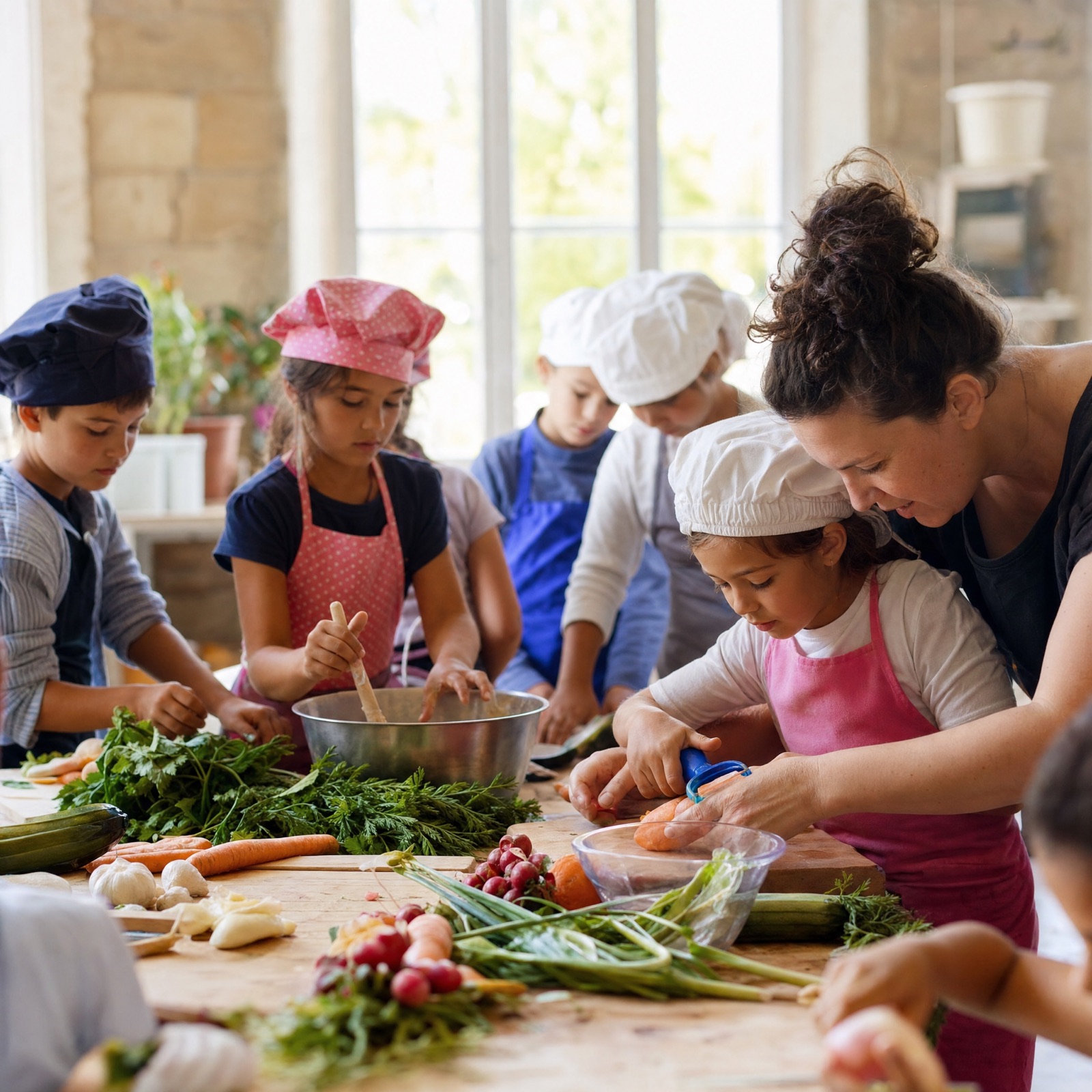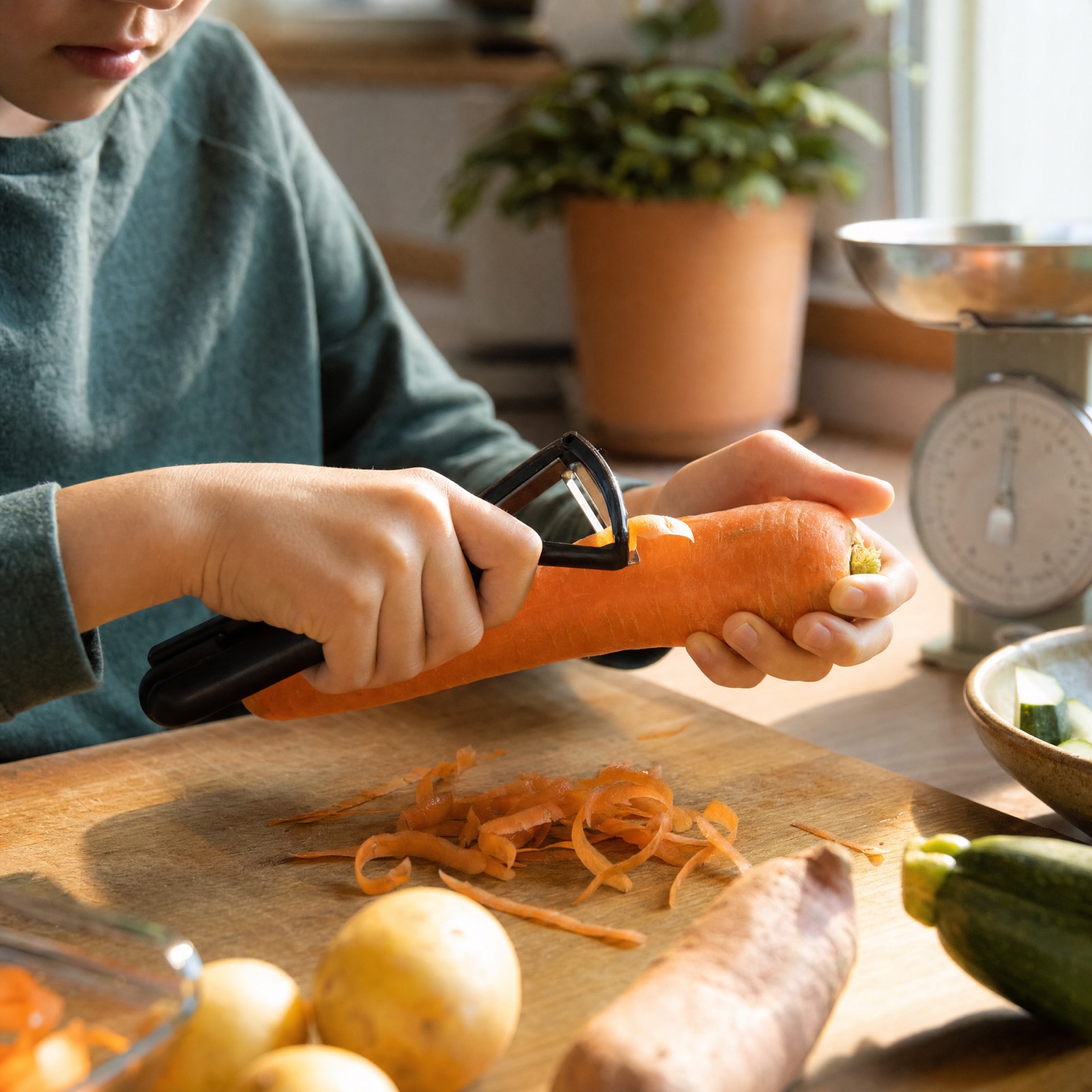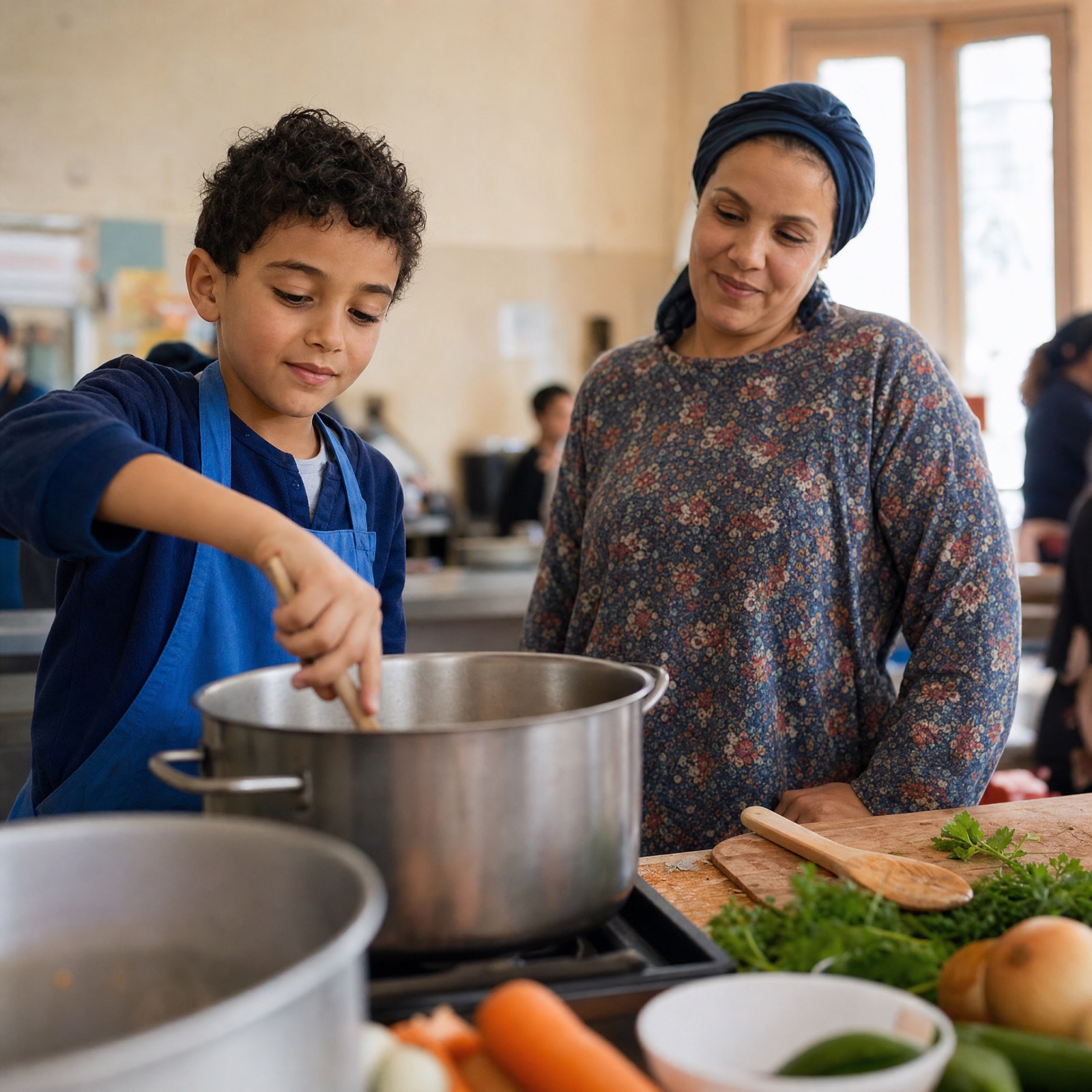
Noah was seven years old when his mother first contacted us, and she used the word "traumatised" in her email. It was a strong word, and she knew it. But after two anaphylactic reactions, three years of scanning every ingredient list at every birthday party, and one incident at school where a biscuit containing hidden milk powder had sent him to the nurse's office pale and struggling to breathe, Noah had developed what his allergist described as a profound anxiety response to eating anything he had not watched being prepared from scratch in his own kitchen. He had stopped accepting food at friends' houses. He dreaded school lunches. He would not touch a plate that had been near another child's food.
His mother had found us through the pediatric allergy clinic at the CHU de Reims, where a member of the nursing team had mentioned our workshops. She was cautious — she read our website carefully and still sent a follow-up email asking whether we were truly certain our kitchen was safe for a child with a cow's milk protein allergy as severe as Noah's. We invited her to visit before committing to a session. She came on a Tuesday, inspected our cleaning protocols and ingredient storage, spoke with our dietitian for forty minutes, and left saying she would think about it.
"Voir les enfants décorer leurs biscuits et les emballer pour les rapporter chez eux — c'est pour ça qu'on revient chaque semaine."
She brought Noah three weeks later. He sat at the far end of the table for the first twenty minutes, arms folded, watching the other children measure and pour. Our lead educator, who has fifteen years of experience with anxious young bakers, did not push. She worked alongside him, narrating what she was doing in a calm, unhurried voice, and slid a small bowl of rice flour in his direction without comment. Eventually — because he was seven, and the flour looked interesting, and everyone else was evidently having a good time — he reached in.
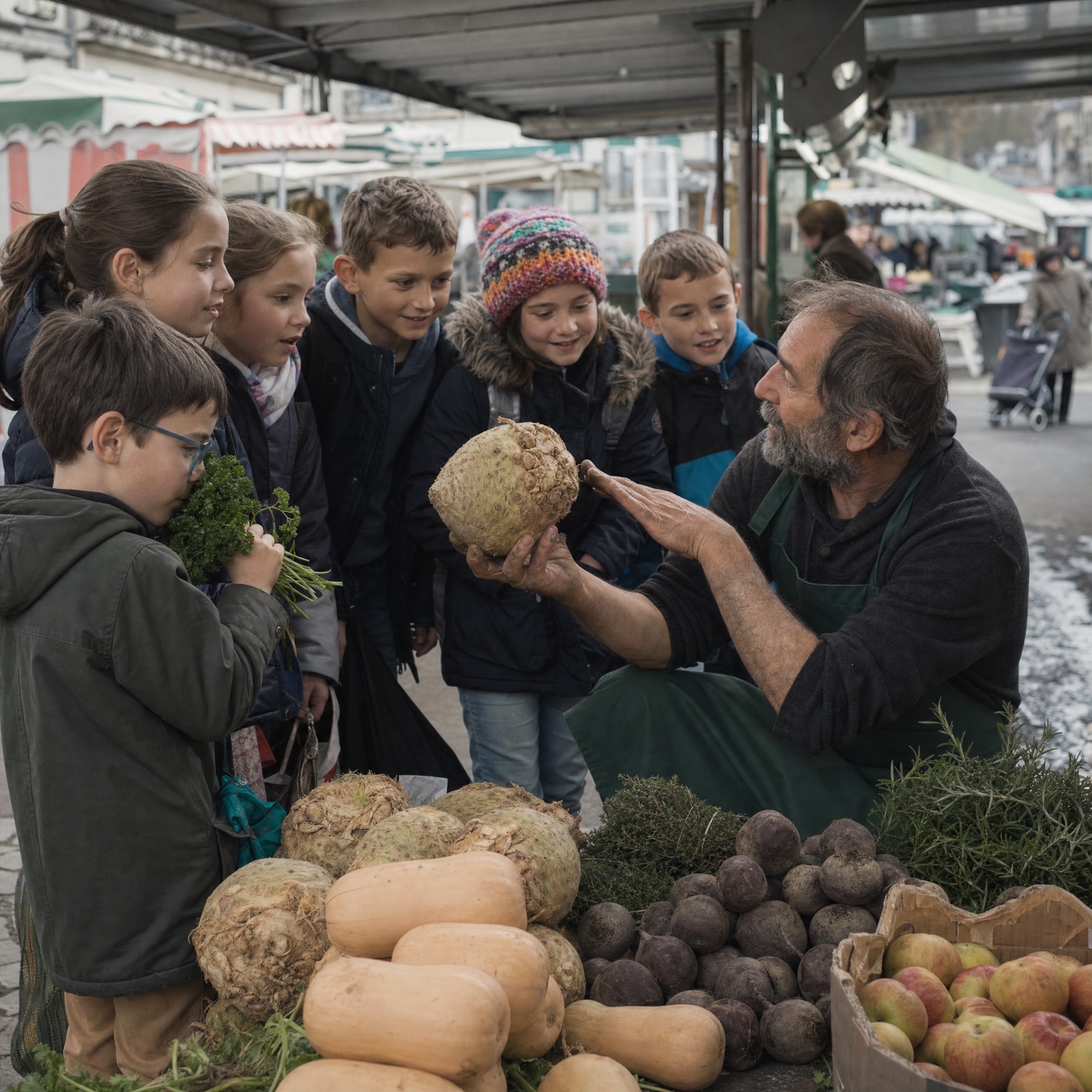
What followed over the next eleven months was not a sudden transformation. It was something slower and more durable. Noah attended eight of our fortnightly sessions. He learned, by incremental steps, that he could read an ingredient list and trust it, that he could eat something made in a kitchen that was not his own, and that the anxiety he felt around food was not a fixed fact about himself but a response to uncertainty — and that uncertainty could be reduced with knowledge, skill, and practice. He still reads every label. He probably always will. But now he does it with competence rather than dread, and that is an entirely different experience.
The open day in May was Noah's idea. He asked his mother, with the particular intensity that eight-year-olds bring to important proposals, whether his grandmother could come to the workshop, because he wanted to teach her how to make the biscuits. She arrived in a good coat and brought a tin of sweets for the educators. Noah, in his apron, demonstrated how to fold aquafaba into the batter without losing the air, correcting her technique with the patient authority of someone who has done this many times. His grandmother, who has been baking for fifty years, received the instruction graciously and declared the result excellent.
We share Noah's story — with his family's full and enthusiastic permission — not as a miracle but as an illustration of what patient, repeated, positive experience in a safe kitchen can achieve. Not every child's journey looks like his. Some take longer; some carry anxieties that our workshops alone cannot address, and for those families we work alongside clinical teams. But the core principle holds: children who live with food allergies deserve spaces where the food is genuinely safe, the environment belongs to them, and the emphasis is firmly on what they can make and eat, not on what they must avoid. That is what we try to build, every session, in our small kitchen near the Place du Forum.
If your child is living with food allergies and you would like to know more about joining our programme, please reach out through the contact form on this website. Referrals through the allergy clinic are welcome, but families can also self-refer directly. Sessions are free of charge. You do not need to bring anything except an appetite and, ideally, an old shirt.